
As interest rates trend upward and the global economy experiences continued volatility, homebuyers are becoming increasingly cautious. Rather than chasing short-term products, they are willing to pay higher prices for projects with sustainable value and a high quality of life.
Recently, a representative of CBRE Vietnam highlighted 3 trends in the residential real estate market. In the new market context, buyers' needs and behaviors are gradually shifting; rather than chasing rapid price appreciation, investors and end-users are prioritizing sustainable values such as modern TOD corridors and product quality.
Among these, the TOD (Transit-Oriented Development) model is viewed as the “brain” of the new HCMC. This model integrates modern living spaces, work spaces, and amenity spaces to foster sustainable living.
Supply driven by infrastructure
This has been the most visible trend in the real estate market over recent times. Notably, after the administrative merger, the new HCMC has evolved into a megacity where ongoing investments in national highways, metro lines, and expressways continue to create focal points for the regional real estate market.
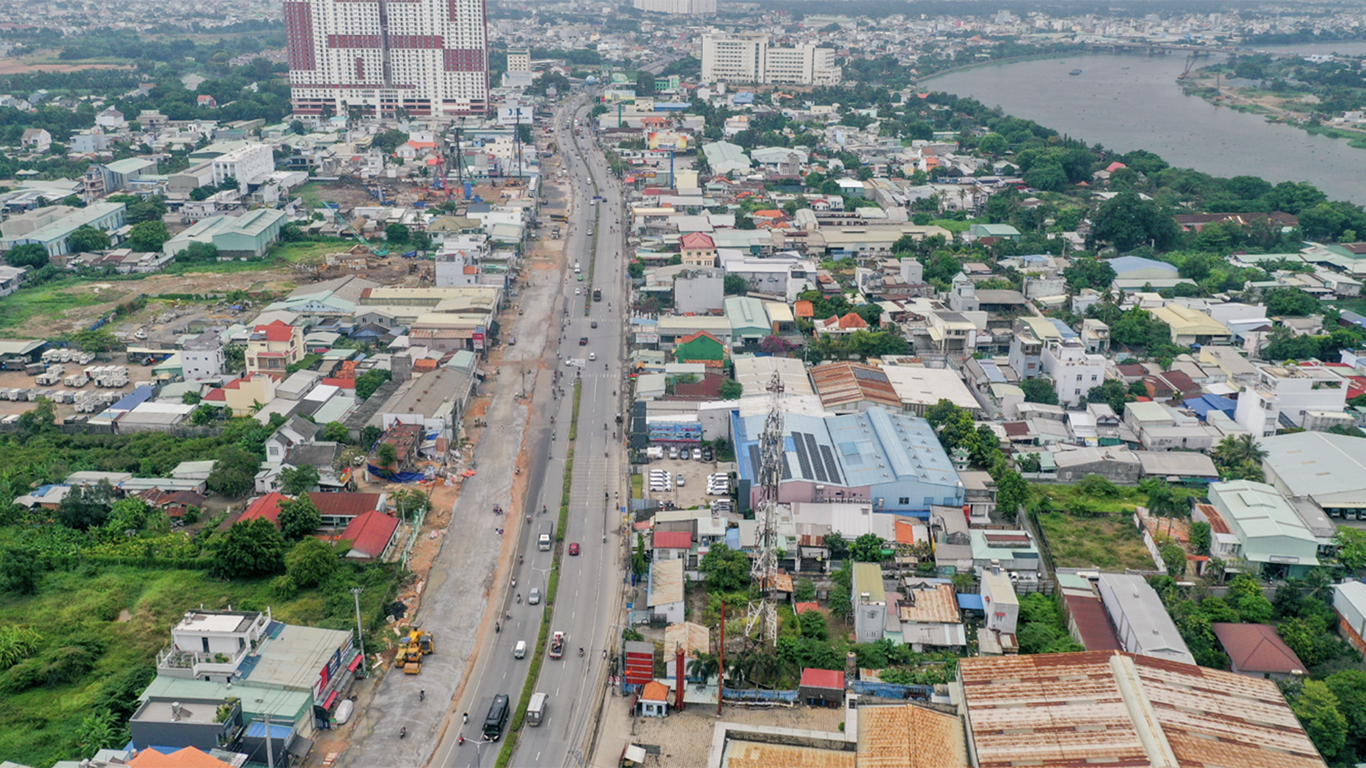
Among them, National Highway 13 has become an infrastructural “bright spot” for Northeast HCMC. Recently, HCMC planned an expenditure of 14.000 tỷ đồng to compensate and relocate over 200 households in order to widen the section from Bình Triệu bridge to Vĩnh Bình bridge. Accordingly, National Highway 13 will be expanded to 60m with a scale of 10 - 14 lanes. An elevated road with 4 lanes will be constructed along the median, allowing vehicles to travel at a maximum speed of 80 km/h.
Below is a frontage road system spanning 8 - 10 lanes, with a maximum speed of 60 km/h. This demonstrates that National Highway 13 is not only an arterial gateway route but also integrates modern transport systems to complete the modern urban model and the central commercial corridor of HCMC.
It is no coincidence that National Highway 13 is expected to become a primary urban axis comparable to Xa lộ Hà Nội, East - West Boulevard, and Phạm Văn Đồng Boulevard—the “backbones” of HCMC that formed modern urban centers and multi-functional commercial and service hubs, attracting both residents and investors.
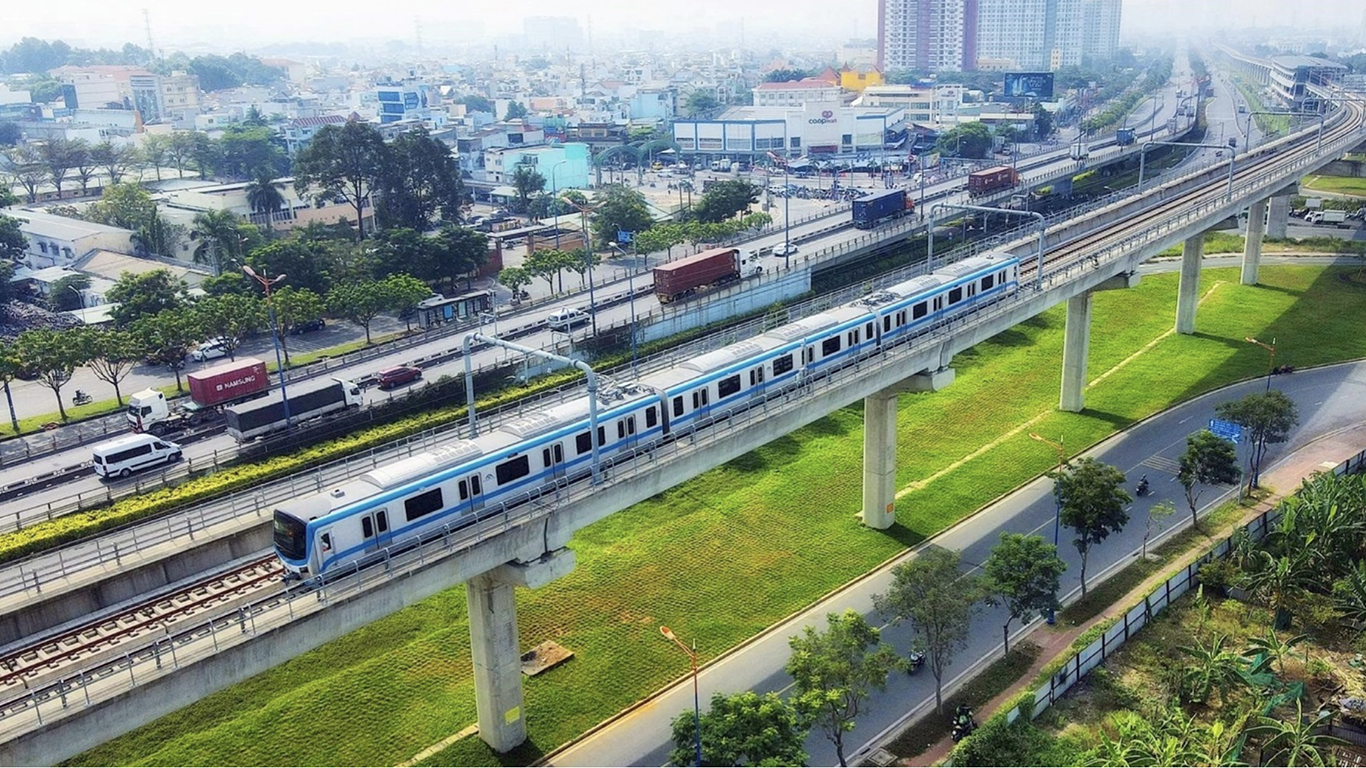
This is because Metro Line 2 (Thủ Dầu Một - HCMC), spanning 21,87 km, is planned along National Highway 13 and prioritized by HCMC for investment before 2035. Running parallel to National Highway 13 and the HCMC - Chơn Thành - Hoa Lư expressway, the line forms a seamless regional connectivity axis, attracting investment, encouraging population dispersion, expanding regional space, and driving urban economic growth. These values of National Highway 13 mirror Xa lộ Hà Nội—where Metro Line 1 (Bến Thành - Suối Tiên) passes through, and which is now a bustling commercial boulevard of HCMC.
In 2020, before the arrival of Metro Line 1 running parallel to Xa lộ Hà Nội, real estate prices here fluctuated between 45 - 80 million/m2. By early 2025—after the metro commenced operations—real estate prices along Xa lộ Hà Nội surged to 90 - 130 million/m2, 1,9 times higher than before metro operations and nearly 5 times higher than in 2010. To date, property value growth in this area shows no signs of slowing down.
With both expansion investments and a planned metro line passing through akin to Xa lộ Hà Nội, National Highway 13's trajectory toward becoming a financial - commercial - service boulevard will not be a distant prospect.
Quality must match price
Ms. Dương Thuỳ Dung, Managing Director of CBRE Vietnam, projects that in 2026, the pace of price growth will stabilize and be slower than in 2025. An abundant new supply will offer buyers more diverse options, thereby intensifying competition among developers. At the same time, market positioning is shifting from generic “high-end” labels to tangible differentiation in “high quality”, focusing on aspects such as building density, unit density, design, amenities, and personalized living experiences.
Notably, amidst homebuyers' growing focus on product quality, developers are also significantly adapting their approach to value. Rather than simply rolling out projects to sell, they are considering the delivery of real value to homebuyers. Developers are prioritizing ensuring that the value delivered by the product corresponds with its market price. This is a trend that underpins the long-term sustainable development of the real estate market.
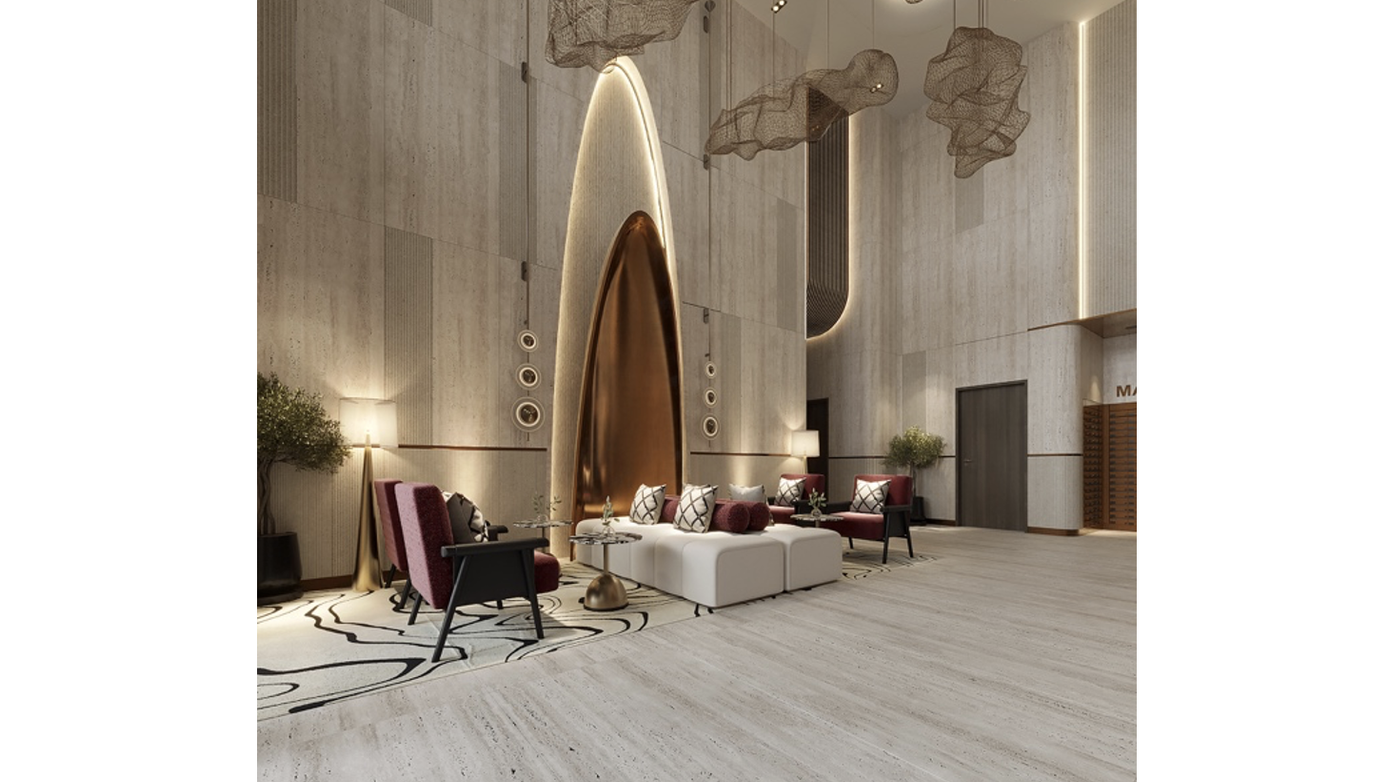
Right at the beginning of 2026, the Northeast HCMC market was surprised by the news that Khải Hoàn Imperial by Khải Hoàn Land was gearing up to enter the market with prices that could reach up to 4.000 USD/m2. This price level is on par with luxury apartment projects along the Bến Thành - Suối Tiên metro line.
According to Khải Hoàn Land, Khải Hoàn Imperial focuses on personalizing living spaces according to the needs, identity, and aesthetic taste of the elite, positioning the project at up to 4.000 USD/m2 with luxury apartment standards. In the context of National Highway 13 undergoing a profound transformation, the market is also watching whether this pioneering Bespoke luxury apartment project along the boulevard will truly set a new benchmark for the region.
“However, by tapping into the preferences of today's elite clientele, this price point is considered fitting for owners who understand individual value and are steadfast in pursuing a distinctive lifestyle,” said a representative of Khải Hoàn Land.