
The market once witnessed real estate along Hanoi Highway – traversed by Ho Chi Minh City Metro Line 1 (Ben Thanh – Suoi Tien) – multiply in value. Will property prices along the National Highway 13 corridor (formerly Binh Duong) – where Metro Line 2 (Thu Dau Mot – Ho Chi Minh City) is set to roll out – repeat this surge, as newly emerging supply is already priced up to 4,000 USD/m2?
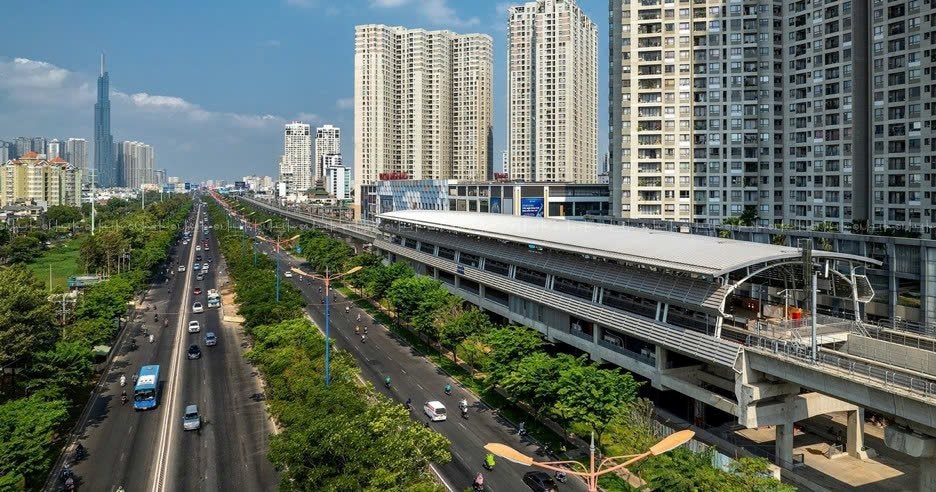
Apartment Prices in (Former) Binh Duong Increasingly "Closing the Gap" with the Old Inner City of Ho Chi Minh City
Recently, the (new) Ho Chi Minh City real estate market has been buzzing as the Khai Hoan Imperial project by Khai Hoan Land launched with pricing potentially reaching 4,000 USD/m2 – on par with the current market rate for apartments along the Ben Thanh – Suoi Tien metro line. This has sparked widespread debate among investors: Is the real estate price level in (new) Ho Chi Minh City establishing a new benchmark?
According to disclosed information, this project boasts a unique concept, positioned as the market's first Bespoke-standard luxury apartment complex, regarded as a new living benchmark in the expanded core zone of the Ho Chi Minh City megacity. Accordingly, the project applies a novel development approach centered on people, with all architectural and master-planning orientations "tailored" to the demands, identity, and lifestyle tastes of the elite – those who deeply appreciate individuality and pursue distinct lifestyles. This also explains why the project debuted with such head-turning price levels.

In fact, along National Highway 13 – in the Northeast Ho Chi Minh City area – several high-end positioned apartment developments had already emerged with prices reaching 2,500 – 2,800 USD/m2.
Notable examples include The Emerald Boulevard Binh Duong by developer Le Phong, Landmark Binh Duong by Phu Cuong Group with rumored prices from 70 – 75 million/m2; Green Skyline by TBS Group starting from 68 million/m2; Urban Green at 75 – 85 million/m2, and Habitat from 55 – 60 million/m2. Moving toward New City, Midori Park The Glory by Becamex Tokyu ranges between 58 – 60 million/m2; Sycamore – Capitaland starts from 60 million/m2…
Surveys show that land prices along National Highway 13 have grown vigorously over recent years. While 5 years ago, frontage land along National Highway 13 (Hiep Binh – Binh Trieu section) was priced at just 45 – 55 million/m2, it currently records 100 – 180 million/m2. Meanwhile, internal roads just 300 – 500m from the main frontage have reached 60 – 80 million/m2, nearly doubling in 3 – 4 years.
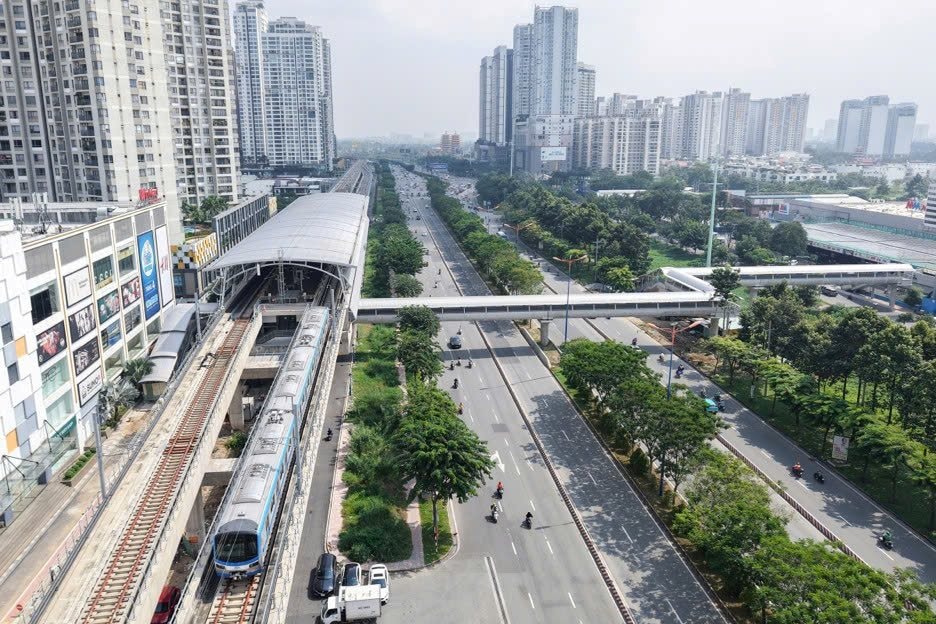
At a recent seminar, Mr. Vo Huynh Tuan Kiet, Residential Director of CBRE Vietnam, stated that primary apartment prices in (former) Ho Chi Minh City increased by an average of 29%/year; while in (former) Binh Duong and Dong Nai, they climbed 14 – 15%/year. In particular, projects along National Highway 13 registered growth of 15 – 25% directly benefiting from invested transport infrastructure. These prices are projected to rise further as National Highway 13 is expanded to 60m in 2026.
Evidently, just half a year after the administrative merger, apartments in (former) Binh Duong are witnessing a pricing race. CBRE statistics reveal that in 2026, 60% of apartment supply in former Binh Duong falls within the high-end and luxury segments – unprecedented in historical terms.
Notably, despite steep price hikes, the East Ho Chi Minh City market continues to draw substantial buyer interest. This shows the market is gradually accepting the new price plateau in (former) Thuan An and Di An and adapting to the new Ho Chi Minh City "household registration." Many anticipate that real estate prices in (former) Binh Duong could reach an average threshold of 4,000 USD/m2 in the near future.
Multiple Catalysts Pushing Real Estate Values Toward New Milestones
Numerous factors support forecasts that real estate price levels in (new) Ho Chi Minh City will attain new peaks before long.
When weighing comparative factors such as investment attraction, per capita income, or connectivity to District 1 (former Ho Chi Minh City), (former) Di An and Thuan An hold advantages over former District 9 and Thu Duc District. Meanwhile, local real estate prices remain 30-40% lower than in District 9 and Thu Duc District (former Ho Chi Minh City), leaving substantial room for upward appreciation.
As psychological barriers regarding "Ho Chi Minh City residency status" dissolve, attractive pricing, abundant supply, and robust infrastructure upgrades have motivated buyers to shift toward housing projects in (former) Binh Duong. A clear testament is the recent surge of residents from District 12, Go Vap, Binh Thanh, and (former) Thu Duc moving to Thuan Giao Ward, Binh Hoa Ward, and Binh Duong Ward to buy homes. Property search demand in (former) Binh Duong surged by 49% post-merger.
Furthermore, a sequence of TOD urban areas is being planned along the metro line, laying the groundwork for integrated coordination between transport infrastructure and urban space, directly impacting real estate values in East Ho Chi Minh City.
In its comprehensive report on "TOD Model in Ho Chi Minh City: Future Development Trends," CBRE Vietnam affirmed that TOD (Transit-Oriented Development) serves as the "brain" of the new Ho Chi Minh City urban area. Real estate projects within TOD influence zones consistently carry higher values than other areas. The impact of transport infrastructure on property values has remained evident and consistent across decades.
CBRE cited that across Singapore, Hong Kong, South Korea, and Thailand, property prices multiplied upon the arrival of metro lines. Notably in Bangkok and Manila, apartment prices along metro lines grew by 50-100% within the first 5 years of development, with large-scale master-planned communities recording exponential price leaps thanks to the metro.
In Vietnam, the market has similarly observed multiple "leaps" in real estate values tied to metro lines. The primary example is the vital Hanoi Highway corridor – traversed by Metro Line 1 (Ben Thanh – Suoi Tien). Apartment prices along this route (in Thao Dien, An Phu, and former Thu Duc) appreciated by an average of 50% to 200% prior to and following commercial operation – mirroring trends seen internationally.
Following an identical trajectory to Hanoi Highway, National Highway 13 in Northeast Ho Chi Minh City – where the priority Thu Dau Mot – Ho Chi Minh City metro line is located – is forecast to enter a prolonged price upcycle.
Recently, with National Highway 13 accelerating widening works to 60m in early 2026, specifically the section from Binh Trieu Bridge (Thu Duc, former Ho Chi Minh City) to Vinh Binh Bridge, Thuan An, Binh Duong (now Ho Chi Minh City), property prices along this route have risen again. Once completed, this corridor will slash travel time from the Northeast to Hang Xanh and the old District 1 center to just 15 minutes.
Simultaneously, Metro Line 2, running along National Highway 13 from Thu Dau Mot to Hiep Binh Phuoc – closely mirroring the Ben Thanh – Suoi Tien Metro running parallel to Hanoi Highway – is expediting feasibility studies, acting as a powerful growth catalyst for future property appreciation along this axis.
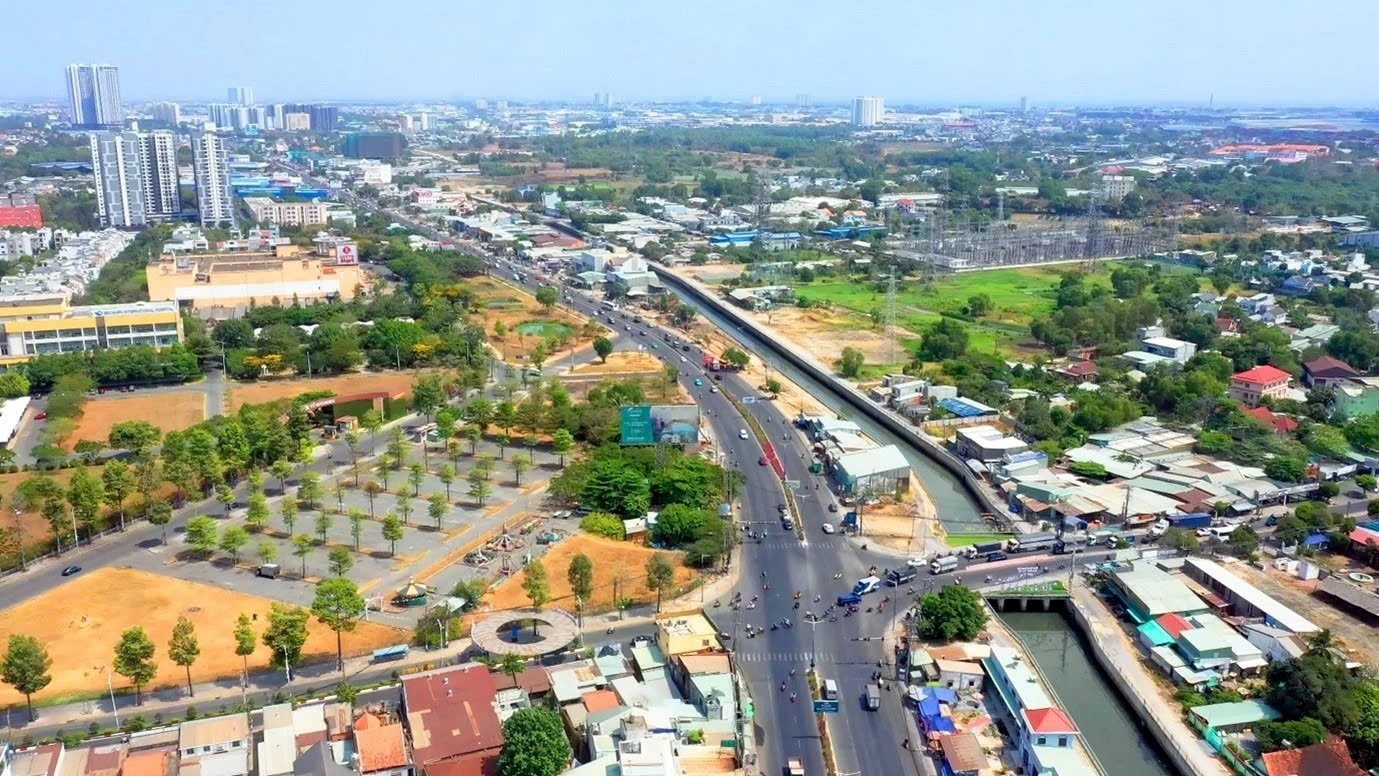
Industry experts predict primary apartment prices along National Highway 13 will experience further sharp increases by 2027 upon full completion of this arterial corridor. This is well-founded given that compensation rates for residential frontage along National Highway 13 within Ho Chi Minh City have been adjusted to over 116 million VND/m2 – pursuant to Decision No. 3137/QD-UBND dated June 23, 2025.
Meanwhile, under Decision No. 2934 approved by the Provincial People's Committee in 2023, the maximum compensation unit price for site clearance along National Highway 13 from Ong Bo Bridge to Huu Nghi Intersection, (former) Thuan An City, reached over 42 million VND/m2. These benchmarks illustrate that future unit prices per m2 along National Highway 13 will remain high.
Moreover, under the new land price framework effective early 2026, land valuations in (former) Binh Duong will surge up to 8-fold, compounding with rising construction materials and land acquisition costs. All these cost components are factored into launch prices, making home price reductions improbable.
This explains the notable uptick in interest directed toward Northeast real estate recently. The mindset of early-entry buyers looking to "front-run" market opportunities is clearly visible at this stage.
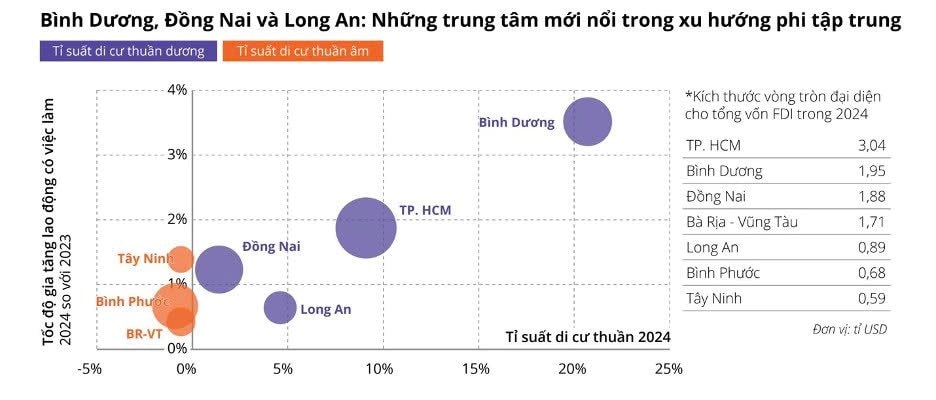
An additional driver is Northeast Ho Chi Minh City's high immigrant population ratio, young labor force, and substantial concentration of specialists working across industrial parks. 2024 statistics show this area had the highest immigration rate nationwide (95.6%). Consequently, absorption rates for the Northeast Ho Chi Minh City apartment market remain stable and discerning. The tens of thousands of units launched today could face a supply shortage in the near future.
Crucially, while gross supply is sizable, premium-quality projects remain scarce. Observations show that despite rising apartment supply in Northeast Ho Chi Minh City in 2025, the area remains underserved in residential developments offering high-end design, modern amenities, and distinct character. This product type fits the criteria of experts, senior executives, and affluent buyers – profiles prioritizing bespoke living spaces, on-site lifestyle facilities, security, and professional management.
This demographic is willing to pay a premium for exceptional living standards, signaling an ongoing upgrade in homebuyer expectations. The progressive enhancement of product quality serves as a core driver sustaining real estate price appreciation across (new) Ho Chi Minh City.
Recently, several high-standard apartment projects have surfaced in the market, yet their volume remains modest relative to genuine demand. Consequently, these newly introduced developments have garnered robust attention from discerning buyers.